The Navi Mumbai Holi riots was a series of violent incidents that took place around Navi Mumbai for about a week beginning the day after Holi (March 14) of 2006. The riots began in the Agri village of Ghansoli, and soon spread to other areas, including Vashi and Koparkhairane. The feuding parties were Ghansoli Agri…
Read more]]>
Warning: Trying to access array offset on value of type bool in /home3/electrp7/public_html/safeholi/wp-content/plugins/my-related-posts/my-related-posts.php on line 75
New Delhi, Mar 21 (PTI) Ten people, including a couple, lost their lives in separate incidents on the day of Holi in the national capital even as the police challaned 7,956 people for traffic violations including 624 for drunken driving. A total of seven persons were killed in five accidents yesterday. While two people were…
Read more]]>
Warning: Trying to access array offset on value of type bool in /home3/electrp7/public_html/safeholi/wp-content/plugins/my-related-posts/my-related-posts.php on line 75
A total of seven persons were killed in five accidents yesterday. While two people were killed in separate hit and run cases, two motorcyclists were killed after their vehicles hit a road divider, police said today.
A couple — insurance agent Vinay Rai (27) and his wife Deepa (23) — were killed in Mukarba Chowk yesterday when their motorcycle collided with a tempo while their minor children escaped death.
Deepa died on the spot while Vinay succumbed to his injuries at Babu Jagjivan Ram hospital during treatment. Their one-and-half-year-old child escaped unhurt while four-year-old daughter suffered head injuries.
They were on way to the house of Deepa”s parents in Seemapuri to celebrate Holi. The couple and the children resided in Rohini Sector 24.
The families of the couple came to know about the incident after one of the eye-witnesses called a number from Vinay”s mobile which happened to be that of a neighbour, a senior police official said.
“The neighbour then informed the families about the accident after which they rushed to the hospital,” he said.
A drunken brawl during Holi celebrations in central Delhi”s Ranjeet Nagar claimed the life of 18-year-old Sanjeev, a labourer, when he was stabbed allegedly by his friends.
He was celebrating Holi when an argument erupted among the friends, a senior police official said. “The argument soon led a scuffle and in between, somebody stabbed him in the chest,” he said.
All of them were under the influence of alcohol, the official said. Sanjay was rushed to a nearby hospital where doctors declared him brought dead.
Another person was killed in a separate mishap.
Two teenagers drowned in the capital yesterday while they were taking bath in river Yamuna after celebrating Holi.
Ajit Kumar (18), a student, drowned in the Yamuna in Timarpur area when he went to wash off colours after the celebrations. In a similar incident, 15-year-old Vicky drowned near Nanaksar Gurudwara in Sonia Vihar when he was taking bath in the river.
Police also challaned 7,956 people for various traffic violations including 624 for drunken driving.
Holi Pooja takes place a day before the Holi Festival. This day is called as ‘Holika Dahan’. There is no special pooja performed on the Holi day. This day is only meant for celebrations and play of colors. Holika Dahan is the major ritual performed at the time of Holi which is also considered an…
Read more]]>
Warning: Trying to access array offset on value of type bool in /home3/electrp7/public_html/safeholi/wp-content/plugins/my-related-posts/my-related-posts.php on line 75
Holi Pooja Process or Holika Dahan Process
Holika Dahan preparations begin almost 40 days before the festival. People start gathering woods on the important crossroads of the city. Holi Pooja or Holika takes place on an auspicious time in the evening a day before the Holi festival. Given below are the steps and rituals for the Holi Pooja:
Holi Pooja can be performed at any place.
A log of wood is kept at a prominent public place on the Vasant Panchami day.
People extend the log centre with twigs, dried leaves, branches of trees and other combustible material.
On the day of Holika Dahan, an effigy of Holika and Prahlad is placed on the huge heap of woods.
Effigy of Holika is made of combustible material while Prahlad’s effigy is made of non-combustible material.
On the eve of Holi, the heap is set alight and the people chant Rakshoghna Mantras of the Rig Veda to cast away the evil spirits.
Left over ashes are collected by people next morning. These ashes are considered holy and are smeared on the limbs of the body as Holi Prasad.
Smearing of body limbs is an act of purification.
Holi Pooja is performed in a different manner in some communities. Marwari women offer Holi puja in the afternoon and evening i.e. before setting fire to ‘Holika’. It is called ‘Thandi Holi’. The whole puja process is considered very auspicious for the married women. It ensures well-being and healthy life of their husband.
]]>Holika Dahan or the lighting of bonfire takes place on the eve of Holi. The day is also popularly called ‘Chhoti Holi’ or the ‘Small Holi’.The bigger event – play with the colour takes place on the next ‘big’ day. Holika Dahan is an extremely popular tradition and is celebrated with fervour all across the…
Read more]]>
Warning: Trying to access array offset on value of type bool in /home3/electrp7/public_html/safeholi/wp-content/plugins/my-related-posts/my-related-posts.php on line 75
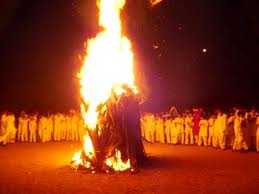
Holika Dahan is an extremely popular tradition and is celebrated with fervour all across the country and is symbolic of triumph of good over evil. There are numerous legends associated with this ancient tradition and it is difficult to pin-point as to when actually the tradition started.
A Brief History
Holikotsav finds a mention in the Vedas and Puranas. It is stated that during the Vedic period the sacred fire of Holi was burnt amidst the chanting of specific mantras which were intended for the destruction of the demonic forces. It is also said that on this very day Vaishwadev oblation commenced in which offerings of wheat, gram and oat were made to the sacrificial fire.
Some scholars believe that Holikotsav is named after fried cereals or parched grains called ‘Holka’ in Sanskrit. These parched grains were used to perform hawana (a fire ritual).The vibhuti (sacred ashes) obtained from this ritual was smeared on the forehead of those who participated in the ritual to keep away evil. This vibhuti is called Bhumi Hari. Till date there is a tradition of offering wheat and oat into the Holika fire.
According to Narad Purana, this day is celebrated in the memory of Prahlad’s victory and the defeat of his aunt ‘Holika’. The legend has it that there once existed a mighty demon king by the name of Hiranyakashyap who wished that everybody in his kingdom should worship him. His son, Prahlad became a follower of Lord Naarayana. Hiranyakashyap instructed his sister, Holika to sit in the burning fire with Prahlad in lap. She was blessed with a boon, as a result of which no fire could burn her. But the opposite happened, Prahlad survived and Holika was charred to death. Thus ‘holi’ is celebrated to commemorate the victory of virtue over evil.
It is because of this event, Holika (a bonfire) is burnt every year on Holi. The burning of the effigy of Holika is called Holika Dahan.
Another legend mentioned in the ‘Bhavishya Purana’ is also considered to be related to the festival of Holi. The legend goes back to the kingdom of Raghu, where lived an ogress called Dhundhi who used to trouble children but was finally chased away by them on the day of Holi. This is said to be the reason why the tradition of Holika Dahan is so popular amongst children and why they are allowed to play pranks on the day.
The Tradition
There is also a specific way in which Holika Dahan takes place. A log of wood is kept in a prominent public place on the Vasant Panchami day, almost 40 days before the Holi Festival. People go on throwing twigs, dried leaves, branches of trees left through the winter besides any other combustible material they can spare, on to that log which gradually grows into a sizable heap. On the day of Holika Dahan an effigy of Holika with child Prahlad in her lap is kept on the logs. Usually, Holika’s effigy is made of combustible materials, whereas, Prahlad’s effigy is made of non-combustible one. On the night of Phalguna Purnima, it is set alight amidst the chanting of Rakshoghna Mantras of the Rig Veda (4.4.1-15; 10.87.1-25 and so on) to ward off all evil spirits.
Next morning the ashes from the bonfire are collected as prasad and smeared on the limbs of the body. If spared by the fire coconuts are also collected and eaten.
Metaphorically though, the fire is meant to signify the destruction of evil – the burning of the ‘Holika’ – a mythological character and the triumph of good as symbolised by Prahlad. However, the heat from the fire also depicts that winter is behind and the hot summer days are ahead.
Next day after Holika Dahan is called Dhuleti, when play with colours actually takes place.
Samvatsar Dahan
It may be noted that in some places like Bihar and UP Holika Dahan is also known as ‘Samvatsar Dahan’. The concept of Samvatsar New Year varies in different provinces of our country. In some provinces the month commences from ‘Krishna Paksha’ while in others it commences from ‘Shukla Paksha’. For Krishna Paksha, the year ends on ‘Purnima’ of the month of Phalgun and thus the new year begins the next day – Chaitra, first day of the Krishna Paksha.
The exclusive white attires adorned by Shri Radhavallabh and the Holi of Vrindavan; has its own charm and colours of Bhakti.People of varied age groups ,irrespective of caste and creed blend with each other screaming out Radha Krishna’s Holi Couplets with every breath.This enthusiasm and sporting spirit is the icing to the festival of colours…
Read more]]>
Warning: Trying to access array offset on value of type bool in /home3/electrp7/public_html/safeholi/wp-content/plugins/my-related-posts/my-related-posts.php on line 75
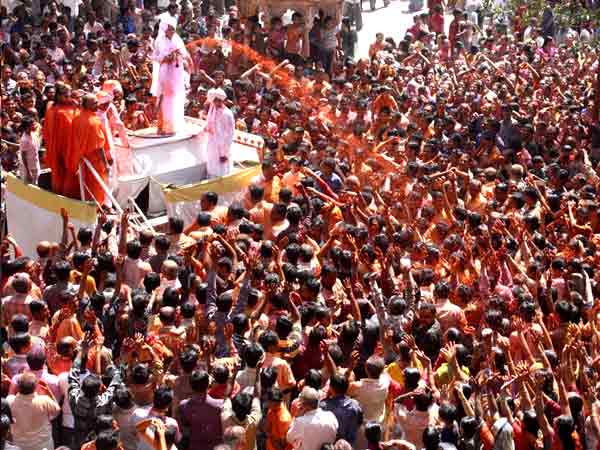
To Enjoy more of Holi Festive moods visit Radha Krishna Holi Utsav;
For vivid Description on the festival visit Festivals Of Vrindavan .

Radha Krishna
Holi Pooja takes place a day before the Holi Festival. This day is called as ‘Holika Dahan’. There is no special pooja performed on the Holi day. This day is only meant for celebrations and play of colors. Holika Dahan is the major ritual performed at the time of Holi which is also considered an…
Read more]]>
Warning: Trying to access array offset on value of type bool in /home3/electrp7/public_html/safeholi/wp-content/plugins/my-related-posts/my-related-posts.php on line 75
Holi Pooja Process or Holika Dahan Process
Holika Dahan preparations begin almost 40 days before the festival. People start gathering woods on the important crossroads of the city. Holi Pooja or Holika takes place on an auspicious time in the evening a day before the Holi festival. Given below are the steps and rituals for the Holi Pooja:
Holi Pooja can be performed at any place.
A log of wood is kept at a prominent public place on the Vasant Panchami day.
People extend the log centre with twigs, dried leaves, branches of trees and other combustible material.
On the day of Holika Dahan, an effigy of Holika and Prahlad is placed on the huge heap of woods.
Effigy of Holika is made of combustible material while Prahlad’s effigy is made of non-combustible material.
On the eve of Holi, the heap is set alight and the people chant Rakshoghna Mantras of the Rig Veda to cast away the evil spirits.
Left over ashes are collected by people next morning. These ashes are considered holy and are smeared on the limbs of the body as Holi Prasad.
Smearing of body limbs is an act of purification.
Holi Pooja is performed in a different manner in some communities. Marwari women offer Holi puja in the afternoon and evening i.e. before setting fire to ‘Holika’. It is called ‘Thandi Holi’. The whole puja process is considered very auspicious for the married women. It ensures well-being and healthy life of their husband.
]]>Songs are an extremely essential part of Holi celebrations. Nobody has realized this fact better than our famous film industry. Bollywood has typically portrayed the mood of Holi from time to time. Hero and heroine getting drenched in colour waters accompanied by hundreds of dancers making merry in the background. Folk touch in the film songs…
Read more]]>
Warning: Trying to access array offset on value of type bool in /home3/electrp7/public_html/safeholi/wp-content/plugins/my-related-posts/my-related-posts.php on line 75
Bollywood has typically portrayed the mood of Holi from time to time. Hero and heroine getting drenched in colour waters accompanied by hundreds of dancers making merry in the background.
Folk touch in the film songs on Holi have made them all the more popular amongst the masses so much so that the famous Holi numbers have become as much essential part of Holi celebrations as the colours itself.
No Holi celebration can be complete without the famous Amitabh Bachchan number from the film Silsilay. Rang Barse…the song has become the Holi anthem of India.
In the festival which does not recognises any restrictions, the hero, Amitabh openly flirts with his girlfriend, Rekha in front of his wife, Jaya and her husband, Sanjeev Kumar. There was so much fun in that song just as it there in the festival of Holi. Anybody immersed in the spirit of Holi with automatically start humming that number.
An attempt was made to duplicate the magic of that song about two decades later with Mr Bachchan again in the movie Baghbaan, by incorporating the famous folk song- Holi khele Raghubeera..awadh mein Holi khele Raghubeera. The song was an instant success…but no song it seems can manage to reach the height of Rang barse..penned by Harivansh Rai Bachchan.
There are numerous other Holi songs which have made their mark and have become a must when it comes to Holi celebrations. These songs have wonderfully captured the spirit of Holi .
]]>Holi or Holika, also called holikotsava, is an extremely popular festival observed throughout the country (India). It is especially marked by unmixed gaiety and frolics and is common to all sections of the people. This festival is very ancient. Known originally as ‘Holika’ it has been mentioned in very early religious works such as Jaimini’s…
Read more]]>
Warning: Trying to access array offset on value of type bool in /home3/electrp7/public_html/safeholi/wp-content/plugins/my-related-posts/my-related-posts.php on line 75
This festival is very ancient. Known originally as ‘Holika’ it has been mentioned in very early religious works such as Jaimini’s Purvamimamsa-sutras and Kathaka-grhya-sutras. It must have therefore existed several centuries before Christ. It was at first actually a special rite performed by married women for the happiness and well-being of their families and the full moon (Raka) was the deity worshipped by them.
There are two ways of reckoning a lunar month: purnimanta and amanta. In the former, the first day starts after the full moon; and in the latter, after the new moon. Though the latter reckoning is more common now, the former was very much in vogue in the earlier days. According to this purnimanta reckoning, Phalguna purnima was the last day of the year and the new year heralding the Vasanta-rtu (with spring starting from next day). Thus the full moon festival of Holika gradually became a festival of merrymaking, announcing the commencement of the spring season. This perhaps explains the other names of this festival: Vasanta-Mahotsava and Kama-Mahotsava.
According to the stories in the Puranas and various local legends, this day is important for three reasons.
- It was on this day that Lord Siva opened his third eye and reduced Kamadeva (the god of love, Cupid or Eros) to ashes.
- It was on this day that Holika, the sister of the demon king Hiranyakasyapu, who tried to kill the child devotee Prahlad by taking him on her lap and sitting on a pyre of wood which was set ablaze. Holika was burnt to ashes while Prahlad remained unscathed!
- It was again on this day that an ogress called Dhundhi, who was troubling the children in the kingdom of Prthu (or Raghu) was made to run away for life, by the shouts and pranks of the mischievous boys. Though she had secured several boons that made her almost invincible, this – noise, shouts, abuses and pranks of boys – was a chink in her armour due to a curse of Lord Siva. The day itself came to be called ‘Adada’ or ‘Holika’ since then.
There are practically no religious observances for this day like fasting or worship. Generally a log of wood will be kept in a prominent public place on the Vasantapanchami day (Magha Sukla Panchami), almost 40 days before the Holi Festival. An image of Holika with child Prahlada in her lap is also kept on the log. Holika’s image is made of combustible materials whereas Prahlada’s image is made of non-combustible ones. People go on throwing twigs of trees and any combustible material they can spare, on to that log which gradually grows into a sizable heap. On the night of Phalguna Purnima, it is set alight in a simple ceremony with the Raksoghna Mantras of the Rgveda (4.4.1-15; 10.87.1-25 and so on) being sometimes chanted to ward off all evil spirits. (Coconuts and coins are thrown into this bonfire).The next morning the ashes from the bonfire are collected as prasad (consecrated material) and smeared on the limbs of the body. Singed coconuts, if any are also collected and eaten.
In some houses the image of Kamadeva is kept in the yard and a simple worship is offered. A mixture of mango blossoms and sandalwood paste is partaken as the prasad.
The day- Phalgun krsna pratipad – is observed as a day of revelry especially by throwing on one another gulal or coloured water or perfumed coloured powder. Throwing of mud or earth dust was prevalent in the earlier days also, but among the low culture groups.
Instead of the gay and frenzied celebrations that are witnessed elsewhere in the country, Bengal observes this festival in a quiet and dignified manner as Dolapurnima or Dolayatra (the festival of the swing). The festival, said to have been initiated by the king Indradyumna in Vrndavana, is spread over 3 or 5 days, starting from the sukla Chaturdasi of Phalguna. A celebration in honour of Agni and worship of Govinda (Krsna) in image on a swing are the important features. The fire kindled on the first day is to be preserved till the last day. The swing is to be rocked 21 times at the end of the festival.
The day is also celebrated as the birthday of Sri Krsna Chaitanya (A.D. 1486-1533), mostly in Bengal, as also in Puri (Orissa), Mathura and Vrndavan (in Uttar Pradesh).
]]>A large number of devotees has thronged to renowned temple of Hindu deity Lord Krishna in Uttar Pradesh to mark the beginning of 40-day colour festival, Holi….Holi festivities begin in Vrindavan]]>
Warning: Trying to access array offset on value of type bool in /home3/electrp7/public_html/safeholi/wp-content/plugins/my-related-posts/my-related-posts.php on line 75
Karachi, March 20 (ANI): The colours of Holi spread love and friendship transcending all borders. It was celebrated in Pakistan yesterday with lot of fervour and gaiety. Elders and youngsters alike…Hindus in Pakistan celebrate Holi]]>
Warning: Trying to access array offset on value of type bool in /home3/electrp7/public_html/safeholi/wp-content/plugins/my-related-posts/my-related-posts.php on line 75
