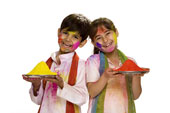
Holi or Holika, also called holikotsava, is an extremely popular festival observed throughout the country (India). It is especially marked by unmixed gaiety and frolics and is common to all sections of the people. This festival is very ancient. Known originally as ‘Holika’ it has been mentioned in very early religious works such as Jaimini’s…
Read more]]>
Warning: Trying to access array offset on value of type bool in /home3/electrp7/public_html/safeholi/wp-content/plugins/my-related-posts/my-related-posts.php on line 75
This festival is very ancient. Known originally as ‘Holika’ it has been mentioned in very early religious works such as Jaimini’s Purvamimamsa-sutras and Kathaka-grhya-sutras. It must have therefore existed several centuries before Christ. It was at first actually a special rite performed by married women for the happiness and well-being of their families and the full moon (Raka) was the deity worshipped by them.
There are two ways of reckoning a lunar month: purnimanta and amanta. In the former, the first day starts after the full moon; and in the latter, after the new moon. Though the latter reckoning is more common now, the former was very much in vogue in the earlier days. According to this purnimanta reckoning, Phalguna purnima was the last day of the year and the new year heralding the Vasanta-rtu (with spring starting from next day). Thus the full moon festival of Holika gradually became a festival of merrymaking, announcing the commencement of the spring season. This perhaps explains the other names of this festival: Vasanta-Mahotsava and Kama-Mahotsava.
According to the stories in the Puranas and various local legends, this day is important for three reasons.
- It was on this day that Lord Siva opened his third eye and reduced Kamadeva (the god of love, Cupid or Eros) to ashes.
- It was on this day that Holika, the sister of the demon king Hiranyakasyapu, who tried to kill the child devotee Prahlad by taking him on her lap and sitting on a pyre of wood which was set ablaze. Holika was burnt to ashes while Prahlad remained unscathed!
- It was again on this day that an ogress called Dhundhi, who was troubling the children in the kingdom of Prthu (or Raghu) was made to run away for life, by the shouts and pranks of the mischievous boys. Though she had secured several boons that made her almost invincible, this – noise, shouts, abuses and pranks of boys – was a chink in her armour due to a curse of Lord Siva. The day itself came to be called ‘Adada’ or ‘Holika’ since then.
There are practically no religious observances for this day like fasting or worship. Generally a log of wood will be kept in a prominent public place on the Vasantapanchami day (Magha Sukla Panchami), almost 40 days before the Holi Festival. An image of Holika with child Prahlada in her lap is also kept on the log. Holika’s image is made of combustible materials whereas Prahlada’s image is made of non-combustible ones. People go on throwing twigs of trees and any combustible material they can spare, on to that log which gradually grows into a sizable heap. On the night of Phalguna Purnima, it is set alight in a simple ceremony with the Raksoghna Mantras of the Rgveda (4.4.1-15; 10.87.1-25 and so on) being sometimes chanted to ward off all evil spirits. (Coconuts and coins are thrown into this bonfire).The next morning the ashes from the bonfire are collected as prasad (consecrated material) and smeared on the limbs of the body. Singed coconuts, if any are also collected and eaten.
In some houses the image of Kamadeva is kept in the yard and a simple worship is offered. A mixture of mango blossoms and sandalwood paste is partaken as the prasad.
The day- Phalgun krsna pratipad – is observed as a day of revelry especially by throwing on one another gulal or coloured water or perfumed coloured powder. Throwing of mud or earth dust was prevalent in the earlier days also, but among the low culture groups.
Instead of the gay and frenzied celebrations that are witnessed elsewhere in the country, Bengal observes this festival in a quiet and dignified manner as Dolapurnima or Dolayatra (the festival of the swing). The festival, said to have been initiated by the king Indradyumna in Vrndavana, is spread over 3 or 5 days, starting from the sukla Chaturdasi of Phalguna. A celebration in honour of Agni and worship of Govinda (Krsna) in image on a swing are the important features. The fire kindled on the first day is to be preserved till the last day. The swing is to be rocked 21 times at the end of the festival.
The day is also celebrated as the birthday of Sri Krsna Chaitanya (A.D. 1486-1533), mostly in Bengal, as also in Puri (Orissa), Mathura and Vrndavan (in Uttar Pradesh).
]]>Holi is also associated with the immortal love of Krishna and Radha, the day begins with worshipping Krishna by lovingly smearing his idol with ‘gulal’ – the colours used to play Holi. This is a festival that is as much a gateway to celebrate the arrival of spring as much as it is a…
Read more]]>
Warning: Trying to access array offset on value of type bool in /home3/electrp7/public_html/safeholi/wp-content/plugins/my-related-posts/my-related-posts.php on line 75
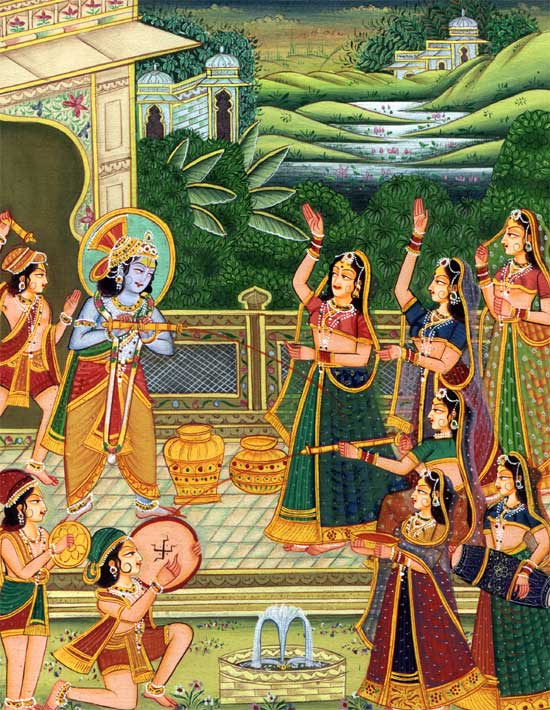
Krishna playing Holi with Gopis
This is a festival that is as much a gateway to celebrate the arrival of spring as much as it is a way to celebrate the season of love. According to the Hindu belief, Krishna was a reincarnation of lord Vishnu himself. It was Krishna, or, Krishn, the king of the ancient city of Dwarka, who popularised the tradition of Holi. The origin of the colorful and frolicking tone of Holi lies in the boyhood of Krishna. It all came up as part of his pranks, he used to play with his boyhood mates of Gokul and Vrindavan. Situated in north India, these are the places where he spent his childhood. It was at this time of year, Krishna used to play pranks by drenching the village girls, with water and colors. At first it offended the girls. But they were so fond of this mischievous boy that soon their anger melted away. And, it did not take long for other boys to join in, making it a popular sport in the village.

Radha & Krishna
There king named Hiranyakashipu whose desire was to be seen as a great man. To fulfill his desire he did the required Tapas (penance) and was granted a boon by Brahma. Once Brahma was pleased by devotion of Hiranyakashyapu, he granted the king wishes that the king will not be killed by human being or…
Read more]]>
Warning: Trying to access array offset on value of type bool in /home3/electrp7/public_html/safeholi/wp-content/plugins/my-related-posts/my-related-posts.php on line 75
Once Brahma was pleased by devotion of Hiranyakashyapu, he granted the king wishes that the king will not be killed by human being or an animal, he will not die either in his home or outside the home, he will not die in the day or at night, he will not die either by astra or shastra, and that he will not die either on land or in the sea or in the air. As this wish was granted, it was completely impossible to kill Hiranyakashyapu by any means and this made him invincible. Hiranyakashyapu ordered people in his kingdom to worship him as a God. Everyone obeyed with the exception of his son Prahlad. Prahlad refused to see his father as a god and stayed devoted to Vishnu.This made Hiranyakashipu very angry and he made various attempts to kill Prahlad. During a particular attempt on Prahlad’s life, King Hiranyakashyapu called upon his sister Holika for help. Holika had a special gift that prevented her from being harmed by fire. Hiranyakashyapu asked her to sit on a bonfire with Prahlad on her lap in the hope that this would kill Prahlad. But as Prahlad chanted Vishnu’s name, Holika was burnt to her death and Prahlad was spared.
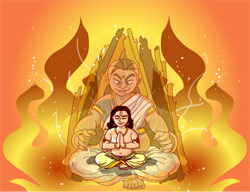
For many traditions in Hinduism, Holi celebrates the death of Holika in order to save Prahlad and we see where Holi gets its name. The night before Holi pyres are burnt in North India in keeping with this tradition. It should also be noted that in some parts of India the day is actually called Holika. There are other activities associated with the story of Prahlad, but the burning of Holika is the one that we can most directly associate with Holi. Fire burnt on the eve of Holi (Holika Dahan) symbolizes the burning of Holika. The story as a whole is testament to the power of devotion (bhakta) over the evil represented by King Hiranyakashyapu, as Prahlad never lost his faith.
The burning of Holika is the most common mythological explanation for the celebration of Holi. In different parts of India varying reasons are given for Holika’s death.
]]>
Color contain harmful chemicals like copper sulphite, mercury sulphate, lead oxide, silicates, aluminum bromide used for industrial purpose hence you need to take precautions before playing with such harmful chemicals. Colors are fun however to make it more enjoyable you should take precautions like • Play with water and avoid synthetic colors • Wear Glasses…
Read more]]>
Warning: Trying to access array offset on value of type bool in /home3/electrp7/public_html/safeholi/wp-content/plugins/my-related-posts/my-related-posts.php on line 75
Colors are fun however to make it more enjoyable you should take precautions like
• Play with water and avoid synthetic colors
• Wear Glasses help avoid colors entering the eyes
• Apply Vaseline on your hands and face
• Apply coconut/ olive oil on your hair
• Apply some waterproof sunscreen further protect your skin
• Wash the colors with cleansing cream or moisturising soap
• Get immediate medical help incase of any irritation after playing with Colors
Other tips:
• While playing Holi, always wear old and ragged clothes that can be discarded immediately after the occasion. Brightly colored and dark colored clothes are preferable for the mood of the day. This way, you will save a lot of time in laundering your stained clothes.
• Wear full-sleeved t-shirts or shirts and clothes that give least exposure to the harmful chemicals of the colors of Holi
• If you are traveling on Holi, keep the car windows tightly shut. It is still better to avoid traveling on the day of playing colors to avoid hit by balloon missiles.
1. First and foremost, do not play with any colors with chemicals in them. Please make this clear to your friends too because no amount of creams and oil can actually guarantee 100% safety. 2. In case of playing with powder colors, make sure that the color doesnt enter eyes. If it does, clean your…
Read more]]>
Warning: Trying to access array offset on value of type bool in /home3/electrp7/public_html/safeholi/wp-content/plugins/my-related-posts/my-related-posts.php on line 75
2. In case of playing with powder colors, make sure that the color doesnt enter eyes. If it does, clean your eyes with water frequently. Do NOT RUB.
3. Gel based colors are best for hair, skin and eyes as they can be removed easily and dont spread thru air.
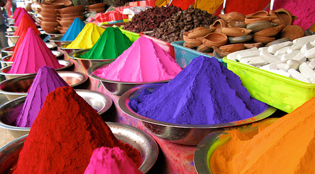
Safety is first and most important for Holi celebration. When we speak about safety during Holi festival, there are number of safety measures and precautions to be adopted. In India, entire country wears a festive look when it is time for Holi celebration. Holi is one of the festivals celebrated by all, irrespective of their…
Read more]]>
Warning: Trying to access array offset on value of type bool in /home3/electrp7/public_html/safeholi/wp-content/plugins/my-related-posts/my-related-posts.php on line 75