These unique natural holi colors come in the form of a gel which makes them very light giving a cool sensation on the skin. They are non-toxic which makes them extremely skin, hair and eye friendly. Its very easy to remove too. Just use a wet wipe or a wet cloth and wipe hence saving…
Read more]]>
Warning: Trying to access array offset on value of type bool in /home3/electrp7/public_html/safeholi/wp-content/plugins/my-related-posts/my-related-posts.php on line 75

These unique natural holi colors come in the form of a gel which makes them very light giving a cool sensation on the skin. They are non-toxic which makes them extremely skin, hair and eye friendly. Its very easy to remove too. Just use a wet wipe or a wet cloth and wipe hence saving water. Whats better is that these eco-friendly colors are very safe for kids and babies too. Have a Carefree Holi!.
Includes set of 4 colours : Pink, Orange, Yellow and Violet.

Festival of vivid colors Holi in 2012 will be celebrated on March 8, Thursday which is famous with a festival name “Dhuleti”. A day before of Holi 2012, ‘Holika Dahan’ will take place on March 7.Everyone deeply enjoys Hindu festival Holi in March month. Following Hindi calendar, Holi is celebrated on Full moon day of Phalgun month.…
Read more]]>
Warning: Trying to access array offset on value of type bool in /home3/electrp7/public_html/safeholi/wp-content/plugins/my-related-posts/my-related-posts.php on line 75
Everyone will enjoy eating tasty and mouth-watering foods on festival Holi in 2012.Make your Holi 2012 complete by wishing your relatives, friends or close people with sweet SMS.
]]>The best places to celebrate Holi in India really depend on what kind of experience you want to have. You’ll find activities taking place almost all over India, but they range from traditional temple rituals to modern parties with DJs, bhang, and plenty of colors. See which of these six places, with totally different Holi…
Read more]]>
Warning: Trying to access array offset on value of type bool in /home3/electrp7/public_html/safeholi/wp-content/plugins/my-related-posts/my-related-posts.php on line 75
Want to know the meaning of Holi and find out when it’s held each year? The answers are in this Holi Festival Guide.
1. Mathura and Vrindavan: Traditional Holi
Sri Krishna Janmastham
Holi festival celebrations last for 40 days in the temple towns of Mathura and Vrindavan, four hours from Delhi. Mathura is where Lord Krishna was born, while Vrindavan was where he spent his childhood. During the 40 days prior to the main Holi day, dancers from various parts of India gather to put on shows depicting Krishna’s flirtations with the village maidens. Singing troupes perform Holi folk songs as well. Make sure you arrive well before the main Holi day. The Sri Krishna Janmastham in Mathura holds a renowned show in the week before Holi. The five day celebrations at Shri Banke Bihari Mandir in Vrindavan are also legendary.
2. Delhi: Modern Holi
Holi Cow
Holi tends to be a rowdy affair in Delhi. If you’re staying anywhere near Paharganj, be prepared to be covered in color by shopkeepers and children alike if you step outside. If you can, try and get tickets to the Holi Cow festival. A festival of color, music and madness, it’s is held a short distance outside the city. The environment is safe, and non-toxic colors are provided, along with bhang lassis, street food, and sprinklers to get everyone in the mood. Both DJs and bands perform. Plenty of expats, as well as locals, attend.
3. Shantiniketan, West Bengal: Cultural Holi
bengalnewz.com
The celebration of Holi as Vasanta Utsav (Spring Festival) in Shantiniketan was started by famous Bengali poet and Nobel Laureate Rabindranath Tagore. Inspired by spring and the colors of Holi, he introduced the occasion as an annual event in his Vishva Bharati University there. Students dress up in spring colors and put on a huge cultural program for visitors, including dances to Tagore’s songs. This is followed by the usual throwing of colors. Vasanta Utsav has become a cherished part of Bengali history and culture, and it attracts numerous foreign tourists. Note that festivities happen a day earlier than the given date for Holi in other parts of India.
4. Purulia, West Bengal: Folk Holi
banglanatak.com
A three day folk festival takes place in the Purulia district of West Bengal. It runs in the lead up to Holi and on the actual day. You’ll get to sing and play Holi with the locals, as well as enjoy a wide variety of unique folk art. This includes the remarkable Chau dance, Darbari Jhumur, Natua dance, and songs of West Bengal’s wandering Baul musicians. What makes the festival special is that it’s organized by villagers as a way of helping sustain themselves. The location is around 5-6 hours by train from Kolkata, or transport in private vehicles can be arranged. Accommodation is provided in tents and there are portable toilets as well.
5. Jaipur: Holi and Elephants
www.flickr.com user Pondspider.
An elephant festival kicks off Holi celebrations in Jaipur every year on Holi eve. Elephant parades, elephant beauty contests, folk dances, and tug-of-war between elephants, locals and foreigners are all regular events. It makes Holi extra fun!
6. Banswara: Tribal Holi
http://banswara.nic.in
Holi is the main festival of the tribals in the Banswara district of Rajasthan. They wear their traditional dresses, carry swords and sticks, and perform the Gair dance. It’s a typical tribal dance of the region. To get there, the nearest airport is in Udaipur, around 165 kilometers away. Alternatively, there’s a railway station at Ratlam (Madhya Pradesh), around 80 kilometers away. More travel information, including maps and hotels, is available on the local government wesbiste.
7. Where not to Celebrate Holi: South India
If you’re looking for an exhuberant Holi, give south India a miss. In the south, the festival is quite solemn and subdued. The focus is mainly on religious aspects and temple rites.
]]>
Holi Pooja takes place a day before the Holi Festival. This day is called as ‘Holika Dahan’. There is no special pooja performed on the Holi day. This day is only meant for celebrations and play of colors. Holika Dahan is the major ritual performed at the time of Holi which is also considered an…
Read more]]>
Warning: Trying to access array offset on value of type bool in /home3/electrp7/public_html/safeholi/wp-content/plugins/my-related-posts/my-related-posts.php on line 75
Holi Pooja Process or Holika Dahan Process
Holika Dahan preparations begin almost 40 days before the festival. People start gathering woods on the important crossroads of the city. Holi Pooja or Holika takes place on an auspicious time in the evening a day before the Holi festival. Given below are the steps and rituals for the Holi Pooja:
Holi Pooja can be performed at any place.
A log of wood is kept at a prominent public place on the Vasant Panchami day.
People extend the log centre with twigs, dried leaves, branches of trees and other combustible material.
On the day of Holika Dahan, an effigy of Holika and Prahlad is placed on the huge heap of woods.
Effigy of Holika is made of combustible material while Prahlad’s effigy is made of non-combustible material.
On the eve of Holi, the heap is set alight and the people chant Rakshoghna Mantras of the Rig Veda to cast away the evil spirits.
Left over ashes are collected by people next morning. These ashes are considered holy and are smeared on the limbs of the body as Holi Prasad.
Smearing of body limbs is an act of purification.
Holi Pooja is performed in a different manner in some communities. Marwari women offer Holi puja in the afternoon and evening i.e. before setting fire to ‘Holika’. It is called ‘Thandi Holi’. The whole puja process is considered very auspicious for the married women. It ensures well-being and healthy life of their husband.
]]>Holika Dahan or the lighting of bonfire takes place on the eve of Holi. The day is also popularly called ‘Chhoti Holi’ or the ‘Small Holi’.The bigger event – play with the colour takes place on the next ‘big’ day. Holika Dahan is an extremely popular tradition and is celebrated with fervour all across the…
Read more]]>
Warning: Trying to access array offset on value of type bool in /home3/electrp7/public_html/safeholi/wp-content/plugins/my-related-posts/my-related-posts.php on line 75
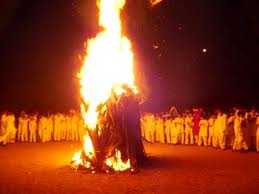
Holika Dahan is an extremely popular tradition and is celebrated with fervour all across the country and is symbolic of triumph of good over evil. There are numerous legends associated with this ancient tradition and it is difficult to pin-point as to when actually the tradition started.
A Brief History
Holikotsav finds a mention in the Vedas and Puranas. It is stated that during the Vedic period the sacred fire of Holi was burnt amidst the chanting of specific mantras which were intended for the destruction of the demonic forces. It is also said that on this very day Vaishwadev oblation commenced in which offerings of wheat, gram and oat were made to the sacrificial fire.
Some scholars believe that Holikotsav is named after fried cereals or parched grains called ‘Holka’ in Sanskrit. These parched grains were used to perform hawana (a fire ritual).The vibhuti (sacred ashes) obtained from this ritual was smeared on the forehead of those who participated in the ritual to keep away evil. This vibhuti is called Bhumi Hari. Till date there is a tradition of offering wheat and oat into the Holika fire.
According to Narad Purana, this day is celebrated in the memory of Prahlad’s victory and the defeat of his aunt ‘Holika’. The legend has it that there once existed a mighty demon king by the name of Hiranyakashyap who wished that everybody in his kingdom should worship him. His son, Prahlad became a follower of Lord Naarayana. Hiranyakashyap instructed his sister, Holika to sit in the burning fire with Prahlad in lap. She was blessed with a boon, as a result of which no fire could burn her. But the opposite happened, Prahlad survived and Holika was charred to death. Thus ‘holi’ is celebrated to commemorate the victory of virtue over evil.
It is because of this event, Holika (a bonfire) is burnt every year on Holi. The burning of the effigy of Holika is called Holika Dahan.
Another legend mentioned in the ‘Bhavishya Purana’ is also considered to be related to the festival of Holi. The legend goes back to the kingdom of Raghu, where lived an ogress called Dhundhi who used to trouble children but was finally chased away by them on the day of Holi. This is said to be the reason why the tradition of Holika Dahan is so popular amongst children and why they are allowed to play pranks on the day.
The Tradition
There is also a specific way in which Holika Dahan takes place. A log of wood is kept in a prominent public place on the Vasant Panchami day, almost 40 days before the Holi Festival. People go on throwing twigs, dried leaves, branches of trees left through the winter besides any other combustible material they can spare, on to that log which gradually grows into a sizable heap. On the day of Holika Dahan an effigy of Holika with child Prahlad in her lap is kept on the logs. Usually, Holika’s effigy is made of combustible materials, whereas, Prahlad’s effigy is made of non-combustible one. On the night of Phalguna Purnima, it is set alight amidst the chanting of Rakshoghna Mantras of the Rig Veda (4.4.1-15; 10.87.1-25 and so on) to ward off all evil spirits.
Next morning the ashes from the bonfire are collected as prasad and smeared on the limbs of the body. If spared by the fire coconuts are also collected and eaten.
Metaphorically though, the fire is meant to signify the destruction of evil – the burning of the ‘Holika’ – a mythological character and the triumph of good as symbolised by Prahlad. However, the heat from the fire also depicts that winter is behind and the hot summer days are ahead.
Next day after Holika Dahan is called Dhuleti, when play with colours actually takes place.
Samvatsar Dahan
It may be noted that in some places like Bihar and UP Holika Dahan is also known as ‘Samvatsar Dahan’. The concept of Samvatsar New Year varies in different provinces of our country. In some provinces the month commences from ‘Krishna Paksha’ while in others it commences from ‘Shukla Paksha’. For Krishna Paksha, the year ends on ‘Purnima’ of the month of Phalgun and thus the new year begins the next day – Chaitra, first day of the Krishna Paksha.
Imagine the vibrant festival of Holi without your favourite Bollywood numbers to accompany the celebrations. Unimaginable! Nothing to dance on, nothing to hum and nothing to tease each other with… We’ve dug into the past and present and bring you some evergreen songs to spice up the season. Here is a glimpse of the ‘most…
Read more]]>
Warning: Trying to access array offset on value of type bool in /home3/electrp7/public_html/safeholi/wp-content/plugins/my-related-posts/my-related-posts.php on line 75
We’ve dug into the past and present and bring you some evergreen songs to spice up the season. Here is a glimpse of the ‘most wanted’Holi songs – for your eyes-only!
Holi Ke Din Rang Mil Jaate Hai:
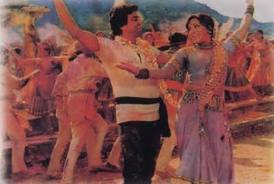
This colourful number from Ramesh Sippy’s ‘Sholay’ is one of the best Holi songs with its lyrics emphasizing on washing away enmity by splashing colour on each other.
Rang Barse:
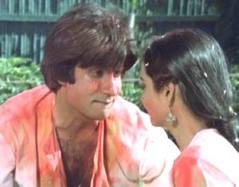
The chemistry crackled between Amitabh Bachchan and Rekha in this song from ‘Silsila’. It’s a perfect depiction of getting naughty on Holi with your ‘special’ friend!
Hori Khele Raghuveera:
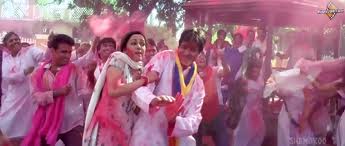
Holi tracks are synonymous with Amitabh Bachchan and it is inevitable that his name figures again. This one from ‘Baghban’ makes you dance with the dream jodi of Hema Malini and Big B.
Ang Se Ang Lagana Sajan:
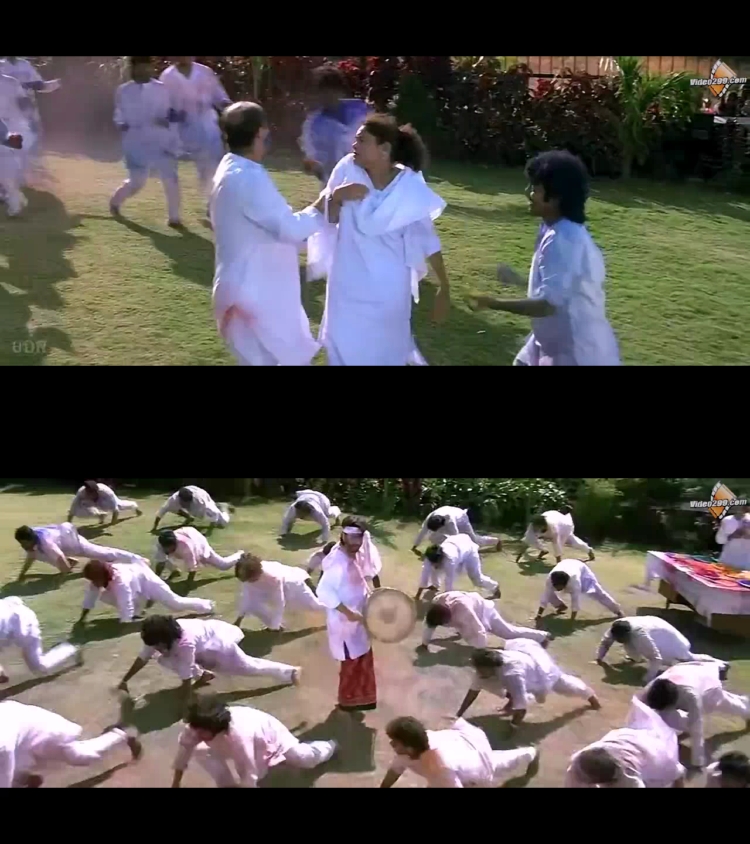
This playful track from ‘Darr’ adds zing to the hues of Holi and is a flawless depiction of showering colours of love on each other.
Do Me A Favour Let’s Play Holi
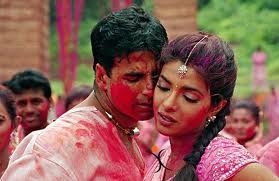
Featuring doomed lovers Akshay Kumar and Priyanka Chopra, this song from ‘Waqt’ reminds one of his salad days. So, do us a favour and groove with this sumptuous number this Holi!
Aaj Na Chhodenge Bas Humjoli Khelenge Hum Holi:
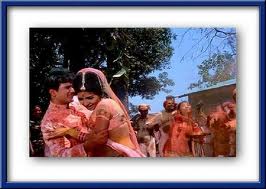
Rajesh Khanna, in his typical style, entices Asha Parekh on the sacred day of Holi. This timeless song from ‘Kati Patang’ is a must on the list.
Dekho Aayi Holi:
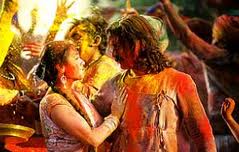
This one from ‘Mangal Pandey’ conveys the message of forgetting sorrows in clouds of blues, greens and reds. So, go and paint one and all alike while grooving on this track!
Chhan Ke Mohalla Saara:
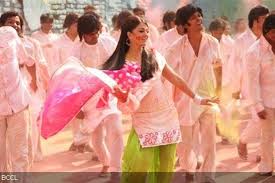
This song from ‘Action Replayy’ makes a spanking new entry in the category of Holi songs with Aishwarya Rai shaking a leg and splashing colour!
Soni Soni Ankhiyon Wali:
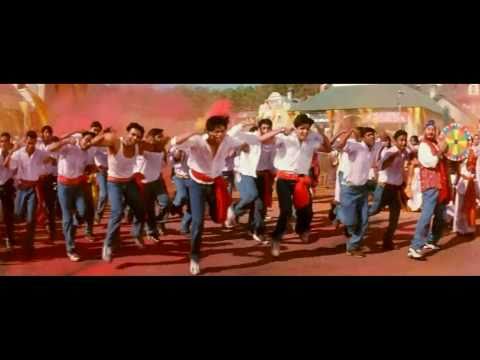
This sparkling track from ‘Mohabbatein’ breathes an air of romance and adds to the merriment, the very spirit of Holi!
Some other Holi classics:
Mal De Gulal Mohe, Aaye Holi Aaye Re from ‘Kaamchor’
Apne Rang Mein Rang De Mujko from Aakhir Kyon
Aayee Re Aayee Re Holi from ‘Zakhmee’
Phagun Aayo Re from ‘Phagun’
Holi Aaye Re Kanhayee from ‘Mother India’
Tan Rang Lo Ji Aaj Mann Rang Lo from ‘Kohinoor’
O Dekho Holi Aayi from ‘Mashaal’
Rang Di Preet Ne Rang Di from ‘Dhanwan’
Arre Ja Re Hat Natkhat from ‘Navrang’
So, if music be the colour of Holi, play on!
]]>The exclusive white attires adorned by Shri Radhavallabh and the Holi of Vrindavan; has its own charm and colours of Bhakti.People of varied age groups ,irrespective of caste and creed blend with each other screaming out Radha Krishna’s Holi Couplets with every breath.This enthusiasm and sporting spirit is the icing to the festival of colours…
Read more]]>
Warning: Trying to access array offset on value of type bool in /home3/electrp7/public_html/safeholi/wp-content/plugins/my-related-posts/my-related-posts.php on line 75
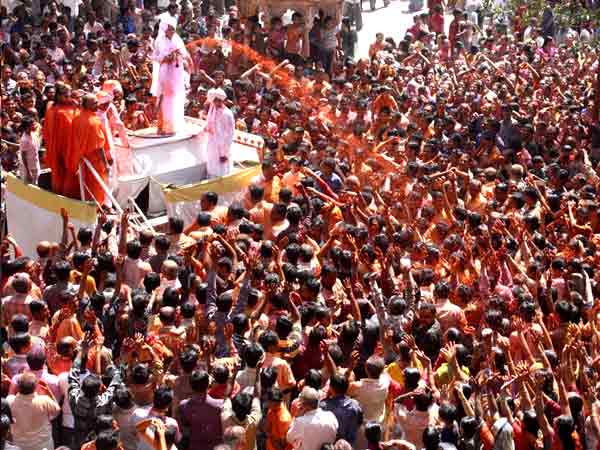
To Enjoy more of Holi Festive moods visit Radha Krishna Holi Utsav;
For vivid Description on the festival visit Festivals Of Vrindavan .

Radha Krishna
Holi, often called the festival of colors, is a spring religious festival celebrated by Hindus where people throw coloured powder and coloured water at each other and make merry. The festival is primarily observed in India, Nepal, Sri Lanka, and any country where there are large Indic populations. The tradition of playing with colours on…
Read more]]>
Warning: Trying to access array offset on value of type bool in /home3/electrp7/public_html/safeholi/wp-content/plugins/my-related-posts/my-related-posts.php on line 75
The tradition of playing with colours on Holi draws its roots from a legend of Radha and the Hindu God Krishna. It is believed that young Lord Krishna was jealous of Radha’s fair complexion. After questioning his mother Yashoda on the darkness of his complexion, Yashoda, teasingly asked him to colour Radha’s face in which ever colour he wanted. In a mischievous mood, Lord Krishna applied colour on Radha’s face, hence the tradition of applying color.
Below are pictures snapped yesterday on the eve of Holi in different parts of the world.
Devotees at the Swaminarayan Temple celebrate the Holi festival of colours with Indian heir to the Swaminarayan Temple, Lalji Maharaj Shri Vrajendraprasdaji Maharaj (unseen) at Swaminarayan Temple in Kalupur, Ahmedabad.
People apply coloured powder to a woman’s face as they celebrate Holi, also known as the festival of colours
Revelers celebrate the Indian festival of Holi on the deck of the ship Peking at South Street Seaport in Manhattan in New York City.
Indian women play with coloured powder during festivities marking Holi in Calcutta, India.
Pakistani Hindu children celebrate Holi at Swami Narain Temple in Karachi.
A Hindu devotee coloured by powder prostrates himself at the Banke Bihari temple in Vrindavan, about 140 kilometers from New Delhi, India. Vrindavan is a famous place for Holi celebrations, where according to legend, the Hindu god Krishna played Holi with his consort Radha.
People react after getting splashed by a bucket of water while celebrating the festival of Holi in Kathmandu.
Children smear coloured powder on each other during festivities marking Holi in Gauhati, India.
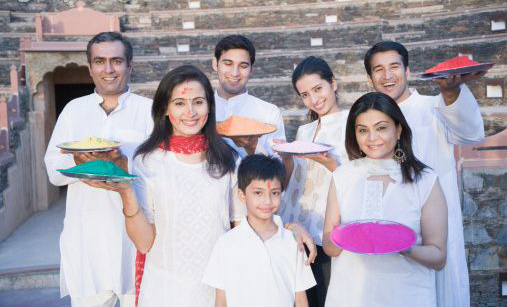
]]>
Holi Pooja takes place a day before the Holi Festival. This day is called as ‘Holika Dahan’. There is no special pooja performed on the Holi day. This day is only meant for celebrations and play of colors. Holika Dahan is the major ritual performed at the time of Holi which is also considered an…
Read more]]>
Warning: Trying to access array offset on value of type bool in /home3/electrp7/public_html/safeholi/wp-content/plugins/my-related-posts/my-related-posts.php on line 75
Holi Pooja Process or Holika Dahan Process
Holika Dahan preparations begin almost 40 days before the festival. People start gathering woods on the important crossroads of the city. Holi Pooja or Holika takes place on an auspicious time in the evening a day before the Holi festival. Given below are the steps and rituals for the Holi Pooja:
Holi Pooja can be performed at any place.
A log of wood is kept at a prominent public place on the Vasant Panchami day.
People extend the log centre with twigs, dried leaves, branches of trees and other combustible material.
On the day of Holika Dahan, an effigy of Holika and Prahlad is placed on the huge heap of woods.
Effigy of Holika is made of combustible material while Prahlad’s effigy is made of non-combustible material.
On the eve of Holi, the heap is set alight and the people chant Rakshoghna Mantras of the Rig Veda to cast away the evil spirits.
Left over ashes are collected by people next morning. These ashes are considered holy and are smeared on the limbs of the body as Holi Prasad.
Smearing of body limbs is an act of purification.
Holi Pooja is performed in a different manner in some communities. Marwari women offer Holi puja in the afternoon and evening i.e. before setting fire to ‘Holika’. It is called ‘Thandi Holi’. The whole puja process is considered very auspicious for the married women. It ensures well-being and healthy life of their husband.
]]>Songs are an extremely essential part of Holi celebrations. Nobody has realized this fact better than our famous film industry. Bollywood has typically portrayed the mood of Holi from time to time. Hero and heroine getting drenched in colour waters accompanied by hundreds of dancers making merry in the background. Folk touch in the film songs…
Read more]]>
Warning: Trying to access array offset on value of type bool in /home3/electrp7/public_html/safeholi/wp-content/plugins/my-related-posts/my-related-posts.php on line 75
Bollywood has typically portrayed the mood of Holi from time to time. Hero and heroine getting drenched in colour waters accompanied by hundreds of dancers making merry in the background.
Folk touch in the film songs on Holi have made them all the more popular amongst the masses so much so that the famous Holi numbers have become as much essential part of Holi celebrations as the colours itself.
No Holi celebration can be complete without the famous Amitabh Bachchan number from the film Silsilay. Rang Barse…the song has become the Holi anthem of India.
In the festival which does not recognises any restrictions, the hero, Amitabh openly flirts with his girlfriend, Rekha in front of his wife, Jaya and her husband, Sanjeev Kumar. There was so much fun in that song just as it there in the festival of Holi. Anybody immersed in the spirit of Holi with automatically start humming that number.
An attempt was made to duplicate the magic of that song about two decades later with Mr Bachchan again in the movie Baghbaan, by incorporating the famous folk song- Holi khele Raghubeera..awadh mein Holi khele Raghubeera. The song was an instant success…but no song it seems can manage to reach the height of Rang barse..penned by Harivansh Rai Bachchan.
There are numerous other Holi songs which have made their mark and have become a must when it comes to Holi celebrations. These songs have wonderfully captured the spirit of Holi .
]]>